One of Captiva Islands’ most famous residents was acclaimed artist Robert Rauschenberg. Rauschenberg moved to Captiva in 1968 and remained there until his death in 2008.  Rauschenberg or Bob as he liked to go by, discovered Sanibel and Captiva in the early 60s when he was exploring the state of Florida. He took the ferry over as the causeway was yet to be built and, once he found Captiva it is claimed he was surrounded by butterflies. He took this as a sign and purchased his first house on the island. His first home was small and right on the beach and he was, over the next 38 years, to accumulate six properties across 20 acres. One of his properties was the “Fish House”. This property was built by and purchased from renowned illustrator and conservationist J.N. Ding Darling, whose legacy remains on Sanibel in the form of the J.N. Ding Darling National Wildlife Refuge. Bob loved the Island and by owning so much land he could stop developers from taking away from the natural habitat. He moved into his largest and final home in 1990. The home can still be seen on 11559 Laika Lane.

A Life Of Art


Robert Rauschenberg was born in Texas and was of German, Dutch and Cherokee descent. He went to university in Texas to study pharmacology however, found the work challenging and dropped out within the year. After being drafted by the Navy in 1944, he went on to study art. It was at art school in Paris where he was to meet artist Susan Weil. They married briefly, divorcing in 1953. They had one child, Christopher, who was born in 1951.
 
In the 1950’s Bob traveled with fellow artist Cy Twombly showing exhibits in Rome and Florence. He started to sell his work and returned to New York where he designed window fronts. He was using found objects and alternative materials. He incorporated these into his work exploring different mediums.  He started to experiment with technology in his work, incorporating clocks, fans, and working radios. He also did silkscreens and lithographs. On moving to Captiva he moved towards natural materials such as cardboard, sand, and wood panels.
 
Throughout his astounding career, Bob would go on to travel to several countries, finding inspiration in the different cultures. He had an interest in dance and performance leading to him working with the likes of Merce Cunningham and Paul Taylor.
 
His legacy is remembered in his generous philanthropic efforts and his incredible commitment to the environment. The 20 acres he purchased in and around Captiva will remain undeveloped.

The Fish House


J.N. “Ding” Darling a Sanibel legend, started to suffer from bronchial issues as he entered his 60s. His place of residency was cold and so he took his family down south to Florida to embrace the tropical temperatures. He purchased land from Clarence Chadwick in the 1930s and in 1942 built the Fish House. The dock leading to the house had a draw bridge which he would routinely pull to concentrate on drawing. In 1978 artist Robert Rauschenberg purchased the property and, like Darling appreciated its solace. The Fish House is still used today by the Robert Rauschenberg Foundation which runs an artist residency on the property. They hold 8 five-week residencies a year and serve approximately 75 artists.
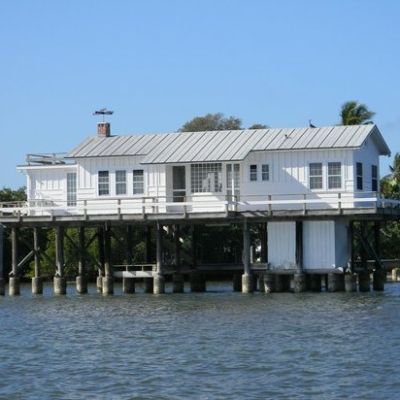
Fish house Ding Darling

Rauschenberg: Art and Life


Find out more about the fascinating life of Robert Rauschenberg in “Rauschenberg: Art and Life”. Discover the pivotal parts of his life and his ever developing artistry and the various stages of his iconic existence.